Those Black Streaks on Your Roof: What the Algae Really Is
You've probably seen those dark streaks running down a roof and assumed it was just dirt or staining. Look at your own roof on a grey Liverpool day and you might spot the same black marks trailing down the tiles from the ridge.
Those streaks aren't dirt at all, they're a living thing, and knowing what they are helps you deal with them properly. It's a type of algae, and in a damp coastal city like ours it finds roofs a very comfortable place to live. Let's clear up what's actually going on up there.
The quick answer: Those black streaks are algae, most often a hardy type called Gloeocapsa magma, feeding on damp and airborne particles, and a soft wash with a biocide treatment is what clears it safely.
1. It's algae, not dirt
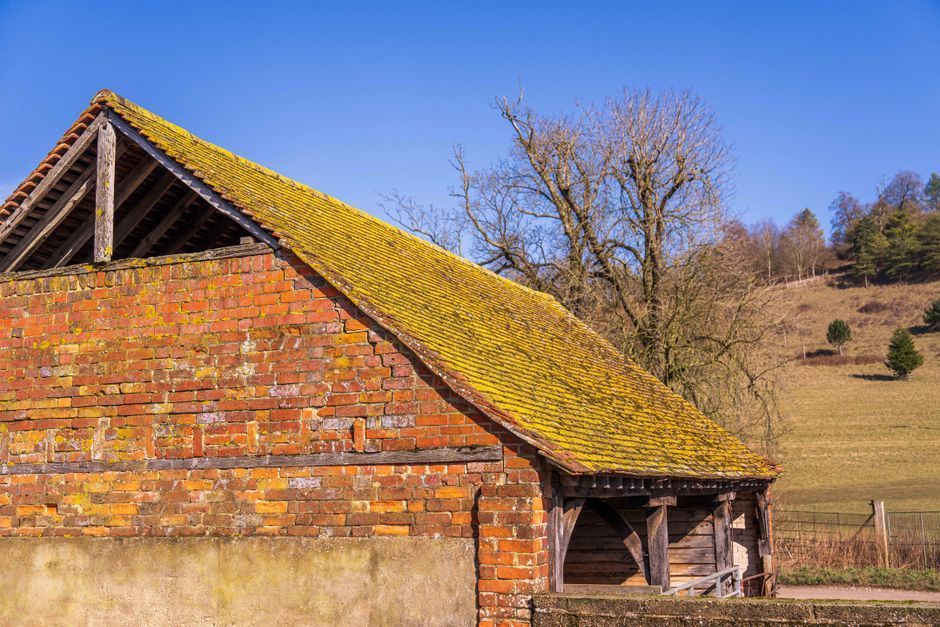
The first thing to understand is that you're looking at growth, not grime. The black staining is colonies of algae that have settled on the roof and spread, and no amount of waiting for rain to wash it off will shift it, because it's alive and holding on.
That's why a quick rinse never works. The algae is rooted into the surface of the tile or slate, and clearing it means treating the growth itself, not just wiping the surface. Once you see it as a living thing rather than a stain, the right approach makes a lot more sense.
2. Why it streaks downward
The streaking pattern isn't random. Algae tends to take hold near the ridge first, where dust and moisture gather, and every time it rains the water carries spores and staining down the slope. That's why you get those long dark trails running from top to bottom.
You'll often see it worse on one side of a Liverpool roof than the other. The north-facing slope stays damp longer and streaks more heavily, while the sunnier side dries out and stays clearer. On a semi in Aigburth or Mossley Hill that difference between the two slopes can be striking.
3. Why Liverpool roofs get it so badly
Our climate is close to ideal for algae. The steady damp off the Mersey and Irish Sea, the higher coastal rainfall, and the mild winters mean roofs rarely dry out fully, and algae thrives on that constant moisture. Inland roofs in drier counties simply don't feed it as well.
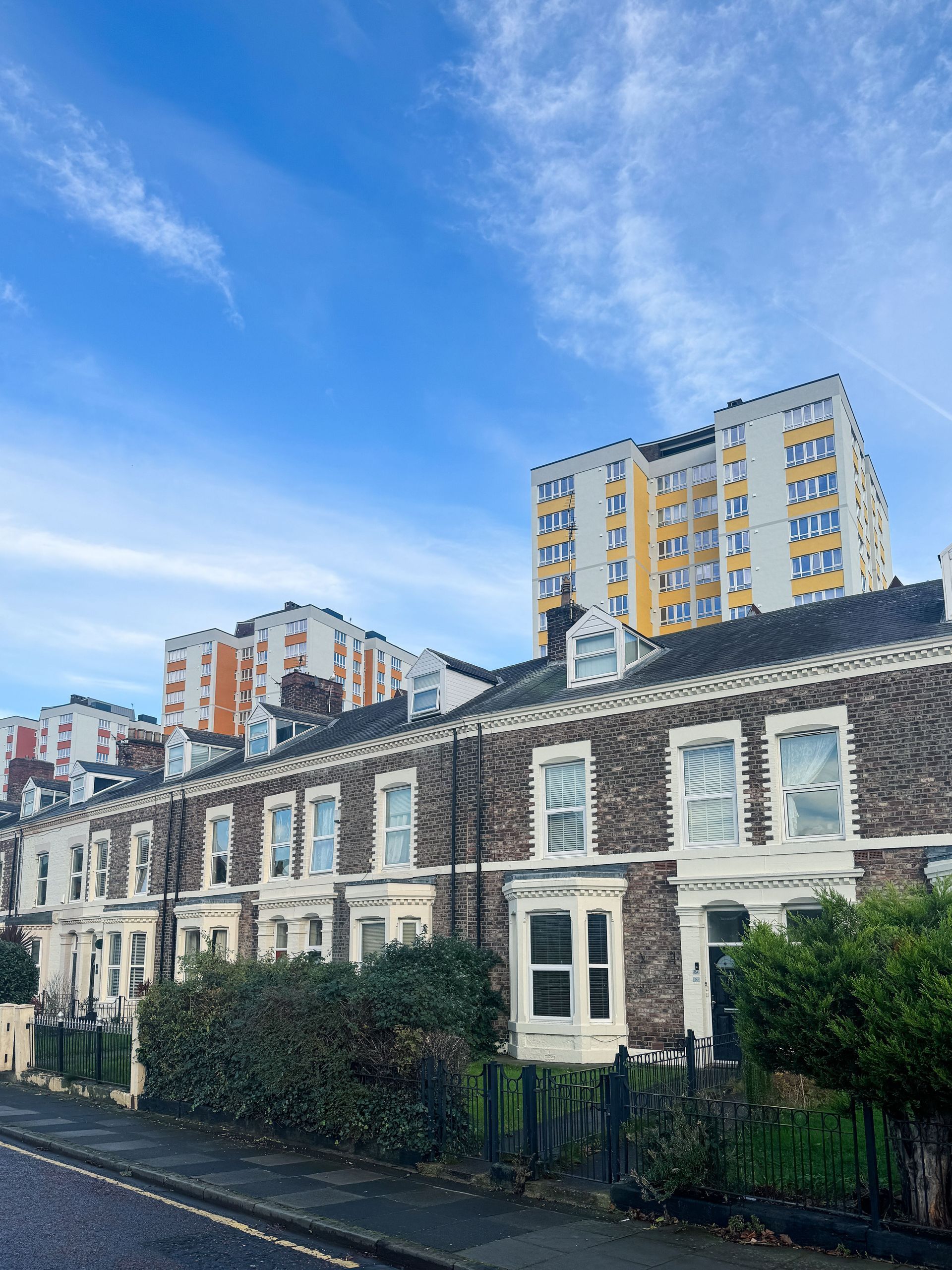
The salt-laden air plays its part too. Airborne particles settle on the roof and give the algae something to cling to and feed on, and the porous surface of weathered Welsh slate on Toxteth and Kensington terraces holds it all in place. It adds up to roofs that streak quickly and heavily here.
4. Is the algae actually harming the roof
Mostly the algae itself is a surface problem, more of an eyesore than a structural threat in the early stages. It makes a roof look tired and neglected, and it can knock the value off a house that's otherwise well kept, which matters if you're thinking of selling.
Left long enough, though, it opens the door to worse. Algae holds moisture on the surface, and that damp invites moss and lichen to move in behind it, and those do cause real damage over time. Clearing the algae early keeps the roof from heading down that road.
5. Why you can't just jet wash it off
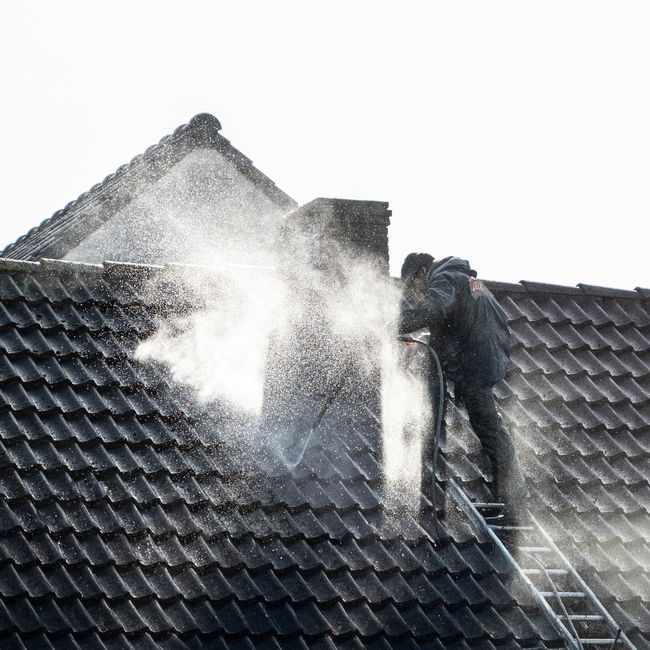
It's tempting to reach for a pressure washer, but blasting algae off a roof does more harm than good. High pressure strips the surface of the tiles, drives water under the slates and can crack aged coastal slate that's already brittle from a century of Merseyside weather.
Soft washing is the answer. Low-pressure water lifts the growth gently, and a biocide treatment kills the algae at the root and keeps working for months so the streaks don't come straight back. It clears the roof without wearing it out, which is exactly what an older Liverpool roof needs.
6. Keeping the streaks from returning
Clearing the algae is one thing, keeping it off is another. The biocide is what makes the difference, staying active in the surface long after the wash so new spores landing through the next wet spell struggle to settle and spread.
A little upkeep locks that in. Given how quickly roofs green and streak in this climate, a check every year or two to treat any early return keeps the roof looking clean far longer. It's much easier to hold a clean roof than to rescue one that's streaked over again.
- It's alive: The black streaks are algae growth, not dirt, so rinsing won't shift them.
- Rain spreads it: Algae starts near the ridge and streaks downward as rain carries it.
- Climate feeds it: Damp coastal air and salt particles make Liverpool roofs streak fast.
- Soft wash only: Low pressure plus a biocide clears it without cracking aged slate.
- Treat to prevent: A biocide keeps working for months to stop the streaks returning.
Frequently Asked Questions
Are black roof streaks just dirt?
No, they're algae, a living growth that clings to the surface. That's why rain and a quick rinse never clear them, and why the roof needs treating rather than just cleaning.
Why is one side of my roof streakier than the other?
The north-facing slope stays damp longer, so algae grows and streaks more heavily there. The sunnier side dries out and usually stays noticeably clearer.
Does algae damage the roof?
Early on it's mainly cosmetic, but it holds moisture that invites moss and lichen, which do cause damage. Clearing it early stops that chain of trouble starting.
Can I pressure wash the streaks off?
Best not to. High pressure strips the tile surface and can crack older slate, so a low-pressure soft wash with a biocide is the safer and longer-lasting choice.
How long until the streaks come back?
With a biocide treatment, a good couple of years or more, depending on shade and exposure. A quick follow-up check catches any early return before it spreads.
Tired of the black streaks on your roof?
Ben's Roof Cleaning clears roof algae the safe way across Liverpool and Merseyside, with over 15 years of experience. Get in touch or call 0151 541 6960
for a free, no-obligation quote.
Knowing what it is makes it easy to sort
Once you know those black streaks are algae rather than dirt, the fix is straightforward: a gentle soft wash to clear it and a biocide to keep it away. Deal with it early and your roof stays clean and tidy through the damp Merseyside months, instead of slowly streaking over year after year.