Clearing Autumn Leaves From Your Gutters
Every autumn the leaves come down, and a fair few of them end up in your gutters. You might not give it a second thought until the first heavy downpour sends water sheeting over the edge instead of running away like it should.
Blocked gutters are one of the most common causes of damp we see on Liverpool homes, and autumn is when the trouble starts. With the leafy streets around Sefton Park and Calderstones and the wet weather that follows straight after leaf fall, clearing your gutters before winter is one of the smartest things you can do for your house.
The quick answer: Clear autumn leaves from your gutters in late autumn, once most have dropped, so water can drain freely through the wet Liverpool winter instead of spilling down your walls.
1. Where all the leaves come from
It doesn't take a forest to fill a gutter. A single mature tree near the house drops enough leaves over a few weeks to pack a gutter solid, and plenty of Liverpool streets are lined with them. If you're anywhere near the trees around Princes Park or Allerton, your gutters are catching more than their share.
Wind spreads it around too. Leaves blow off neighbouring gardens and streets and settle wherever they can, so even a house with no tree of its own ends up with a gutter full by November. The damp Merseyside air keeps them soggy, and wet leaves pack down far tighter than dry ones.
2. What a blocked gutter actually does
A gutter has one job, to carry rainwater off the roof and away from the walls. Fill it with leaves and that water has nowhere to go, so it backs up, overflows the front edge and pours straight down the brickwork. Over a wet winter that soaking is exactly how damp gets into a wall.
It can go the other way too. Water trapped behind a blockage sits against the fascia and can creep back under the roof edge, rotting timber and letting damp into the loft. On the older terraces around Kensington and Anfield, that hidden water does slow damage you don't see until it's advanced.
3. Why timing matters in Liverpool
Get the timing right and you only need to do the job once. Clear the gutters too early, while leaves are still falling, and they fill straight back up. Wait until late autumn when most of the leaves are down, and a single clear-out sets you up for the whole winter.
That matters more here because our wet season lands right on top of leaf fall. Liverpool's rain rolls in off the Irish Sea through autumn and winter, so a gutter blocked in October is a gutter overflowing through the worst months. Clearing late autumn beats the weather to it.
4. The trouble with doing it yourself
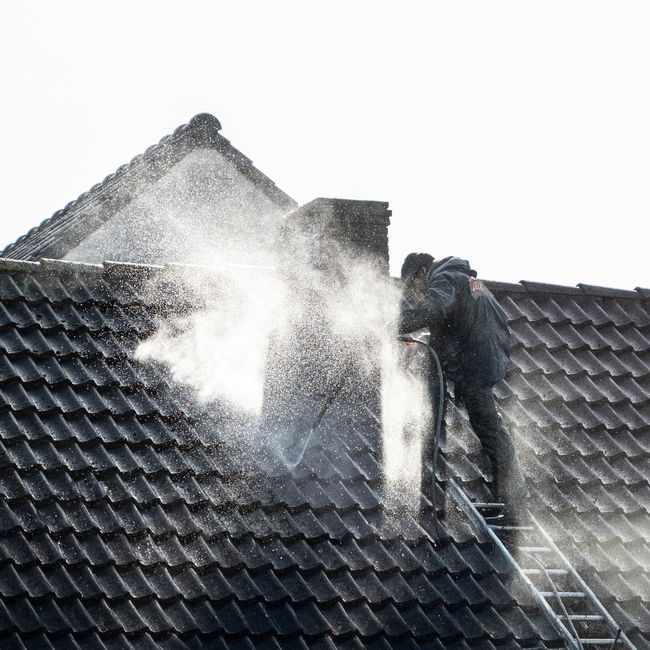
Clearing gutters looks simple until you're up a wobbly ladder in the wind with an armful of wet leaves. Most of the accidents that happen around the home involve falls from height, and a slippery autumn ladder on uneven ground is a classic way to come a cropper.
Access is the other snag. Many Liverpool homes are two and three-storey terraces, and reaching a rear gutter safely often needs proper equipment. Gutter vacuum systems clear the debris from the ground with extending poles, which keeps everyone off the ladder and gets into the bits you can't easily reach.
5. Downpipes and outlets count too
Clearing the gutter is only half the job. Leaves and silt wash down into the downpipes and outlets and clog them where you can't see, and a blocked downpipe backs the whole run up even when the gutter itself looks clear.
So the outlets and pipes get checked as part of a proper clear-out. A quick flow test confirms the water actually runs away rather than sitting in the system. On a shared terrace run in Toxteth or Wavertree, one blocked outlet can affect several houses, so it pays to be thorough.
6. Keeping on top of it year to year
Gutters aren't a one-and-done job, they fill again every autumn. Making the clear-out a yearly habit, booked in for late autumn, means you never end up with the backed-up, overflowing mess that causes damp in the first place.
A yearly clear also gives you a look at the wider roof. Early moss, a slipped slate or a loose length of guttering all show up while someone's up there, so small problems get spotted before a Merseyside winter turns them into big ones.
- Clear late autumn: Wait until most leaves are down so one clear-out lasts the winter.
- Damp risk: Blocked gutters overflow down walls and rot timber at the roof edge.
- Mind the ladder: Falls from height are a real risk, so ground-based clearing is safer.
- Check the pipes: Downpipes and outlets block out of sight and back up the whole run.
- Make it yearly: Gutters fill every autumn, so a set annual clear keeps them working.
Frequently Asked Questions
When is the best time to clear gutters in Liverpool?
Late autumn, once most of the leaves have dropped, is ideal. That way a single clear-out keeps the gutters flowing through the wettest winter months rather than filling straight back up.
How do I know my gutters are blocked?
Water spilling over the edge in rain, plants growing out of the gutter, and staining down the wall below are all clear signs. Sagging lengths of guttering point to a heavy, wet blockage too.
Can blocked gutters really cause damp inside?
Yes. Overflowing water soaks the wall and can creep back under the roof edge, which is one of the most common causes of damp patches and rot on older Liverpool homes.
Is it safe to clear gutters myself?
It can be risky on anything above a single storey, as ladder falls are common. Ground-based gutter vacuum systems clear the debris safely without anyone climbing up.
How often do gutters need clearing?
Once a year suits most homes, timed for late autumn. Houses under heavy tree cover near parks may need a second clear, since they fill up faster.
Gutters overflowing this autumn?
Ben's Roof Cleaning clears leaf-blocked gutters safely across Liverpool and Merseyside, with over 15 years of experience. Get in touch or call 0151 541 6960
for a free, no-obligation quote.
Clear gutters are your first defence against winter damp
Autumn leaves are harmless enough on the ground, but packed into a gutter they turn into the blockage that soaks your walls all winter. A single, well-timed clear-out in late autumn keeps the water moving and your house dry, and it's a far smaller job than putting right the damp that a season of overflow leaves behind.