Chimney, Flashing and Ridge: The Bits People Forget
When you think about your roof you probably picture the tiles or slates, the big obvious surface. It's the smaller details, the chimney, the flashing and the ridge, that quietly cause most of the leaks, and they're the bits people forget to look at.
These are the joints and edges where different parts of the roof meet, and they take a real beating on a Liverpool home. The salt-laden wind off the Mersey and Irish Sea works away at metal fixings, and the higher coastal rainfall finds any weak spot. Here's why these forgotten details deserve your attention.
The quick answer: The chimney, flashing and ridge are the roof's most vulnerable points, so keeping them clear of moss and in good repair is what stops leaks that the main tiles never cause.
1. Why the joints leak, not the tiles
A sound tile or slate sheds water all day long without a problem. Water gets in where the roof changes direction or meets something else, around the chimney, along a valley, or where the ridge caps the top. Those junctions rely on flashing and mortar rather than the tiles themselves.
That's why a roof can look perfect from the street and still let water in. On the older terraces across Wavertree and Kensington, the tiles might have a century of life left in them while the flashing and ridge mortar are the parts crying out for attention.
2. The chimney takes a battering
Chimneys stand proud of the roof and cop the worst of the weather from every side. On exposed Liverpool roofs the wind drives rain hard against the brickwork and mortar, and over the years that soft mortar erodes and the joints open up, letting damp track down inside the stack.
Moss loves a chimney too. It gathers in the shaded corners where the stack meets the roof and holds moisture right at that junction. Plenty of Merseyside homes still have chimneys in use or capped off, and either way they need a look, because a neglected stack is a common source of damp on the chimney breast inside.
3. Flashing and the salt air problem
Flashing is the metal, usually lead, that seals the joints around chimneys, walls and valleys. It does a vital job, but it's exactly the part that suffers most near the coast. The salt-laden air off the Mersey corrodes metal fixings and flashing faster here than it would inland.
When flashing lifts, cracks or corrodes, water runs straight past it into the roof. You often can't see the fault from the ground, but you'll see the result as a damp patch on a bedroom wall or ceiling. On coastal roofs around Aigburth and Grassendale, tired flashing is one of the usual culprits behind a stubborn leak.
4. The ridge holds it all together
The ridge runs along the very top of the roof, capping the point where the two slopes meet. On older Liverpool roofs the ridge tiles are bedded on mortar, and that mortar is out in the weather taking wind and rain from both sides, so it's often the first thing to crack and loosen.
A loose ridge tile is more than a leak risk. In the strong winds that roll in off the Irish Sea, a slipped or lifted ridge tile can come down altogether, which is dangerous as well as costly. Keeping an eye on the ridge line matters more on an exposed Merseyside roof than most people realise.
5. How cleaning reveals hidden faults
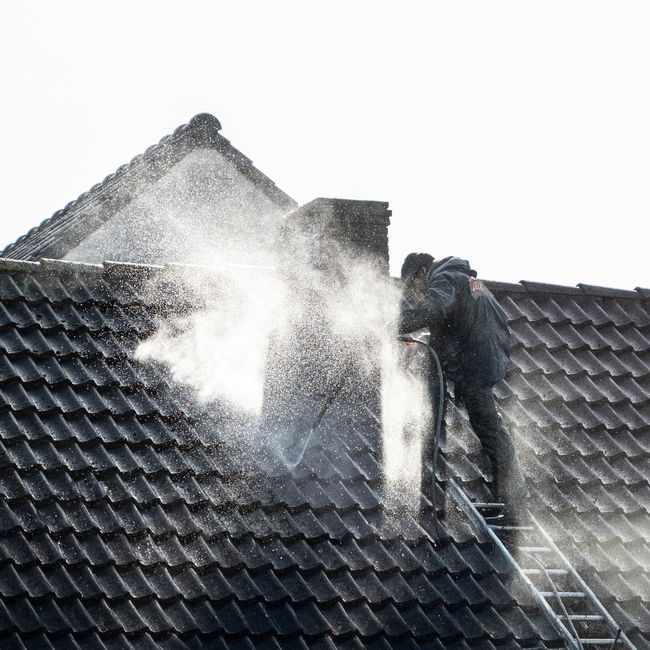
One of the quiet benefits of a proper roof clean is what it turns up. When someone is clearing moss from around the chimney and along the ridge, they're right up close to the exact spots where faults hide, so cracked mortar, lifted flashing and slipped ridge tiles get spotted early.
That early warning is worth a lot. Catching a hairline crack in the flashing during a clean is a small fix, while missing it until water is running down an Anfield bedroom wall is a big one. The clean and the inspection go hand in hand.
6. Keeping the details in good order
Looking after these parts isn't complicated, it just needs doing. Keeping moss cleared from the chimney base, the flashing lines and the ridge stops moisture sitting where it can do harm, and a regular look keeps you ahead of any mortar or metal starting to fail.
It fits naturally into normal roof care. When your roof gets its clean and gutter check, having the chimney, flashing and ridge looked over at the same time means the forgotten bits stop being forgotten. On a weather-beaten Liverpool roof, that's where a lot of trouble is headed off.
- Joints leak first: Water gets in at the chimney, flashing and ridge, not through sound tiles.
- Chimneys are exposed: Wind-driven rain erodes mortar and moss gathers at the stack base.
- Salt corrodes flashing: Coastal air wears metal fixings faster near the Mersey.
- Watch the ridge: Loose ridge tiles risk leaks and can blow down in strong winds.
- Cleaning finds faults: A close-up clean spots cracked mortar and lifted flashing early.
Frequently Asked Questions
Why does my roof leak when the tiles look fine?
Most leaks come from the joints, around the chimney, flashing and ridge, rather than the tiles. These junctions rely on mortar and metal that wear out long before the slates do.
Does coastal air really damage flashing faster?
Yes. The salt-laden air off the Mersey and Irish Sea corrodes lead and metal fixings quicker than inland conditions, so flashing on Liverpool roofs needs checking more often.
How do I know if my ridge tiles are loose?
Gaps along the ridge line, tiles sitting unevenly, or bits of mortar found on the ground are all signs. In strong winds a loose ridge tile can slip, so it's worth checking.
Can moss around the chimney cause damp inside?
It can. Moss holds moisture right at the stack junction, and combined with eroded mortar that damp can track down onto the chimney breast inside the house.
Should the chimney and flashing be checked during a roof clean?
Ideally yes. A clean brings someone right up to those spots, which is the perfect chance to spot cracked mortar or tired flashing before it turns into a leak.
Worried about the chimney, flashing or ridge?
Ben's Roof Cleaning cleans and checks these roof details across Liverpool and Merseyside, with over 15 years of experience. Get in touch or call 0151 541 6960
for a free, no-obligation quote.
The small details protect the whole roof
It's easy to judge a roof by its tiles, but the chimney, flashing and ridge are where the real work of keeping water out happens. Give those forgotten bits a regular look, especially on a salt-battered Liverpool roof, and you head off the leaks that catch most people out long before they ever reach your ceiling.