What Happens During a Soft Wash, Step by Step
You've heard soft washing is the safe way to clean a roof, but you're not quite sure what actually happens on the day. It's a fair thing to wonder about, because letting someone treat your roof is easier when you know what the job involves from start to finish.
Soft washing is the method behind a proper roof clean: low-pressure water paired with a biocide treatment that kills moss and algae rather than blasting it off. On the aged Welsh slate that covers so much of Liverpool, that gentle approach matters, because a harsh jet does more harm than good. Here's how a soft wash unfolds, step by step.
The quick answer: A soft wash starts with a survey, then debris and heavy moss are cleared by hand, a low-pressure rinse follows, and a biocide is applied that keeps killing the growth for months after the visit.
1. The Survey and Setup
Every job starts with a proper look at the roof. That means checking the slate for cracks or slips, spotting corroded flashing or loose ridge mortar, and working out the safest way to reach every part of the surface before anything else begins.
On a Liverpool terrace, setup also means thinking about the neighbours and the ground. With houses joined in long rows around Wavertree or Kensington, the crew plans access down shared entries and protects windows, plants, and paintwork below before a drop of water goes up.
2. Clearing the Loose Debris
Before any treatment, the loose material comes off. Leaves, twigs, and the built-up grit sitting in valleys and gutters are cleared away so the clean can get at the actual roof surface underneath.
This step matters more on coastal roofs that collect a lot. The damp Liverpool air grows moss thick, and mature trees drop plenty of leaf litter, so clearing that first stops it washing straight into freshly cleaned gutters later in the job.
3. Removing the Heavy Moss
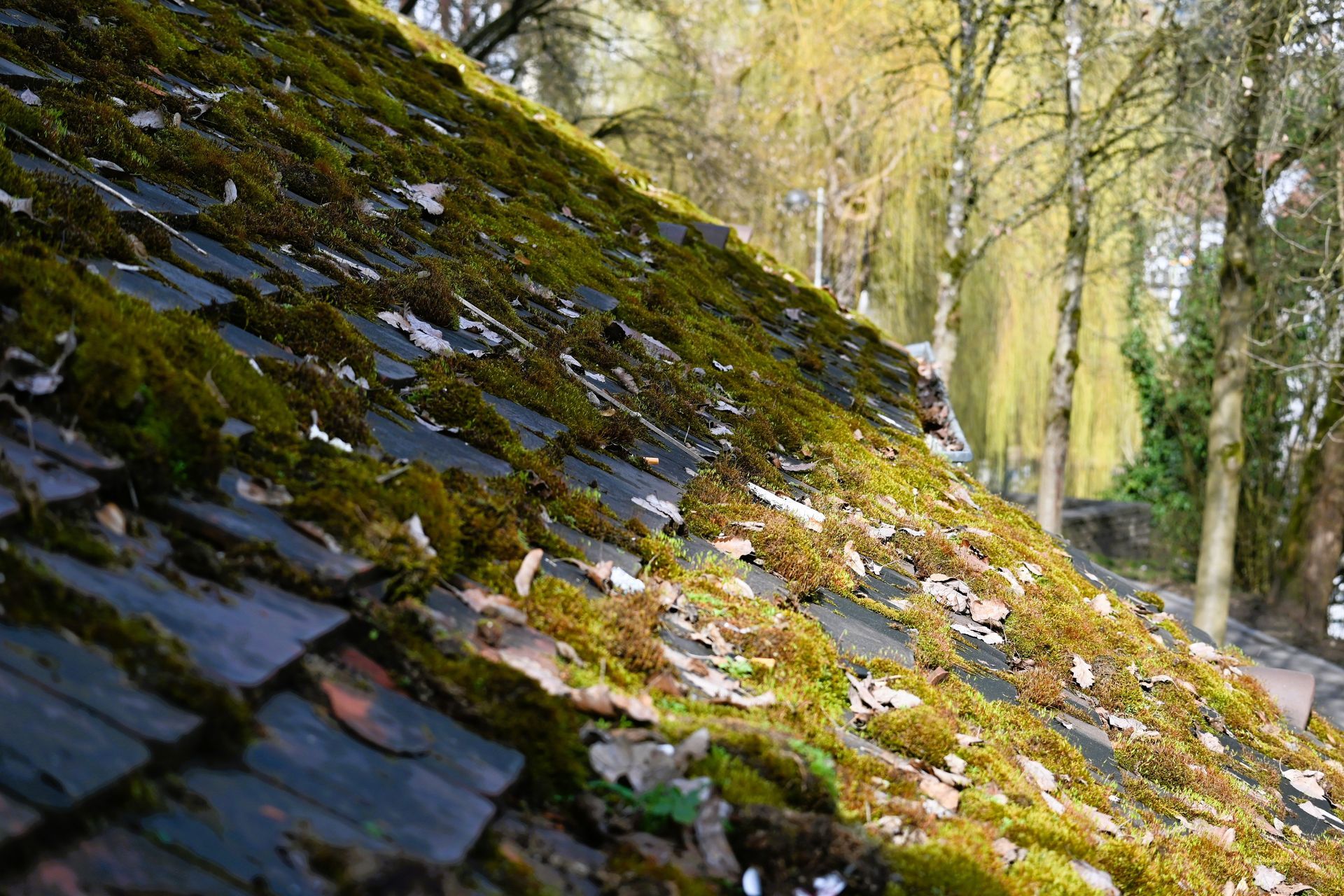
Where moss has really taken hold, it's eased off by hand or with a gentle brush rather than forced off under pressure. Thick growth holds a surprising amount of water and sits proud of the slate, so it needs lifting away before the treatment can do its work.
The touch here is deliberately light. Century-old slate on a Toxteth terrace is brittle, so careful brushing protects the tiles while still clearing the bulk of the growth. Anything scraped loose is collected rather than left to slide into the gutters.
4. The Low-Pressure Rinse
Now the water comes in, but gently. A soft wash uses low-pressure water, often through a water-fed pole from the ground, to rinse the surface clean without driving moisture up under the slate laps the way a pressure washer would.
That gentleness is the whole point on Liverpool roofs. The slate here is old and porous, and the coastal weather already tests it hard, so a low-pressure rinse cleans the surface without adding to the water the roof has to cope with.
5. Applying the Biocide
The key step is the biocide treatment. Once the surface is clear, a biocide is applied that soaks in and kills the remaining algae and moss spores at the root, which is what stops the green growing straight back a few weeks later.
This is why soft washing beats a plain wash in a damp climate. Liverpool's moisture off the Mersey means spores are always ready to regrow, so the treatment carries on working long after the crew has packed up, keeping the roof clearer for many months.
6. The Final Check and Tidy
To finish, the roof and everything below it gets a once-over. The crew checks the gutters run clear, rinses down any splashes on walls or windows, and clears away the moss and debris that came off the roof so the property is left tidy.
A good clean ends with honesty about what was found. If the survey turned up a slipped slate or failing flashing on your Aigburth semi, you hear about it, so you can sort a small repair before Liverpool's next round of Atlantic storms finds the weak spot.
- Survey: The roof is checked for damage and the safest access is planned before work starts.
- Clearing: Loose leaves, grit, and debris come off first so the clean reaches the surface.
- Moss removal: Heavy growth is eased off gently by hand to protect brittle old slate.
- Low-pressure rinse: Gentle water cleans the surface without forcing moisture under the slate.
- Biocide: A treatment kills spores at the root and keeps the roof clear for months.
Frequently Asked Questions
How long does a soft wash take?
It depends on the roof, but most domestic jobs are done in a day. A large or heavily mossed roof with tricky access naturally takes longer than a small, well-kept one.
Do I need to be home while it's done?
Not usually, as long as the crew has access to the roof and any outside taps or areas they need. Most of the work happens outside, so you can carry on as normal.
Will the biocide harm my plants or pets?
A reputable roof cleaner applies it carefully and protects the areas below. It's used at the right strength for roof treatment, and the surrounding ground is covered or rinsed as needed.
Why not just pressure wash and skip the biocide?
Because pressure washing damages old slate and the moss returns fast without treatment. The biocide is what makes the clean last, especially in Liverpool's damp coastal climate.
Will I see a difference straight away?
Yes, the roof looks much cleaner once the surface growth is off. The biocide then keeps working over the following weeks, and any remaining staining continues to fade.
Thinking a soft wash is what your roof needs?
Ben's Roof Cleaning handles roof cleaning, moss removal, and gutter cleaning across Liverpool and Merseyside, with over 15 years of experience. Get in touch or call 0151 541 6960
for a free, no-obligation quote.
Gentle Cleaning That Actually Lasts
A soft wash isn't complicated, but every step is there for a reason, from the careful survey to the biocide that keeps working once everyone's gone home. Done properly, it clears the moss and algae without putting a scratch on your slate, and it keeps the roof looking right through the wet Liverpool months ahead. That mix of gentle and lasting is exactly why it's the method that suits our coastal roofs best.