How Blocked Gutters Lead to Damp Walls in Liverpool
You've noticed a dark patch spreading on a wall, maybe a musty smell in the back bedroom, and put it down to old brickwork. More often than not, the real culprit is sitting up at roof level, quietly overflowing every time it rains.
A blocked gutter is one of the most common causes of damp walls, and in a city that sees as much rain as Liverpool, it does its damage quickly. Water that should be running away neatly instead pours down the brickwork day after day, and eventually it finds its way inside. Here's the chain of events, and how to break it.
The quick answer: Blocked gutters overflow and send water cascading down your external walls, and that constant soaking eventually soaks through the brick and shows up as damp patches, mould, and peeling plaster inside.

1. Where the Blockage Starts
Gutters fill up with the everyday debris that lands on a roof: leaves, moss, grit, and the odd bit of nesting material. Over a season it packs down into a soggy dam that stops water reaching the downpipe, and once that happens the gutter has nowhere to send the rain but over the edge.
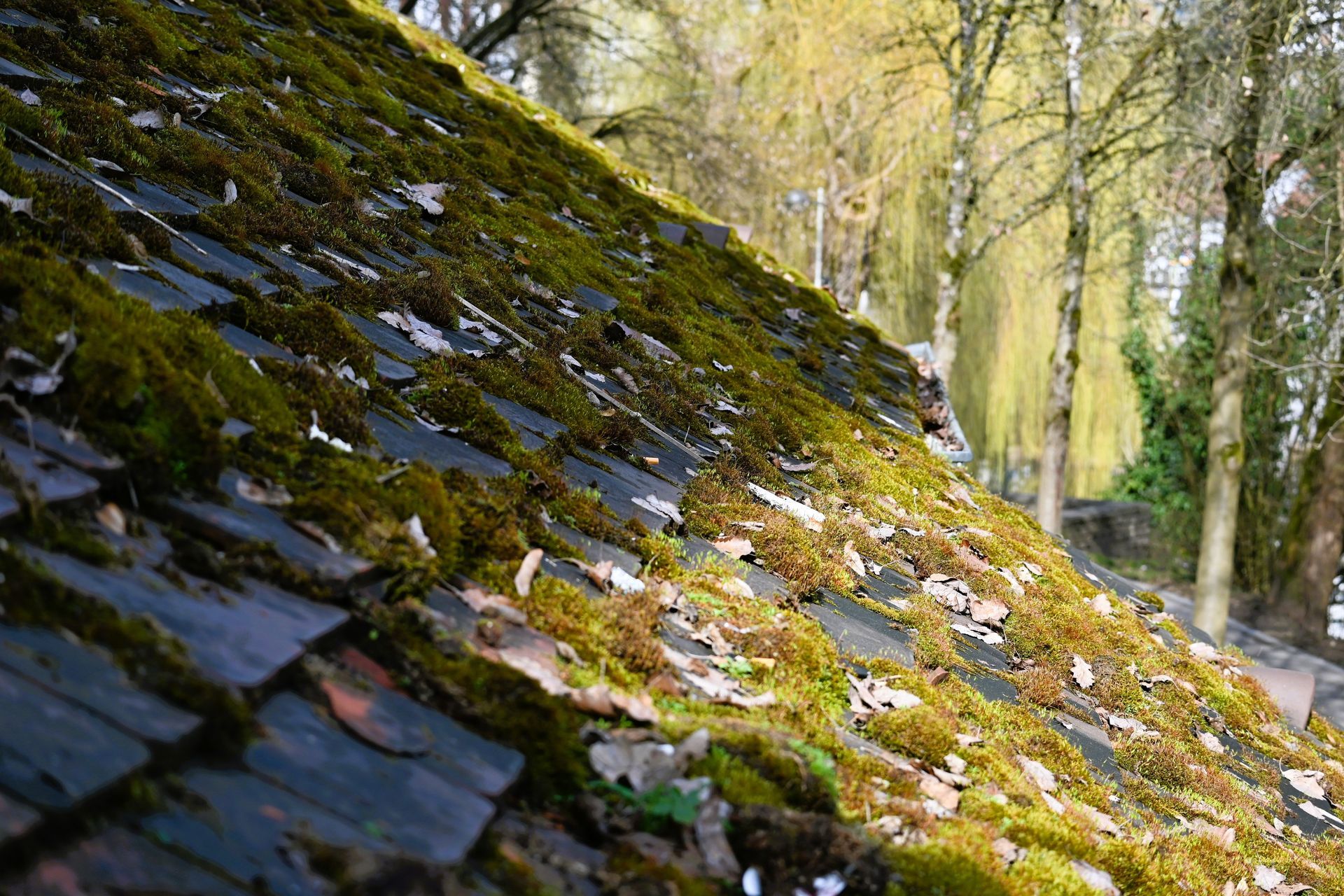
Liverpool roofs feed their gutters more than most. The moss that thrives in the damp coastal air breaks off the slate in clumps and washes straight down, and the mature trees around areas like Aigburth and Sefton Park drop a heavy load of leaves each autumn. Both end up in the gutter.
2. What Overflowing Water Does to a Wall
When a gutter overflows, the water doesn't fall clear of the house. It runs straight down the external wall, keeping the brickwork saturated in a way that normal rain never does, because rain hits and dries while an overflow soaks the same strip constantly.
Brick and mortar are porous, so given enough time that water works its way through to the inside face. On the solid brick walls common to older Liverpool terraces, which have no cavity to stop moisture crossing, a persistent overflow can show as internal damp within a matter of weeks in a wet spell.
3. The Signs It's Already Happening
Inside, watch for tide-mark stains near skirting or ceiling, blown plaster, peeling paint, and a musty smell that won't shift. Mould in a corner that always feels cold is another giveaway, especially on a wall that faces the prevailing weather.
Outside, look during a downpour. If you can see water sheeting over the gutter edge or a green streak running down the render below a joint, that's your blockage announcing itself. In Kensington and Toxteth, where terraces share long runs of guttering, one blockage can overflow across several homes.

4. Why Liverpool's Weather Speeds It Up
The wetter the climate, the faster a blocked gutter turns into a damp wall. Liverpool sits on the coast and catches a good deal of rain blowing in off the Irish Sea, so gutters here are tested far more often than in the drier east of the country.
The wind matters too. Atlantic storms drive rain sideways against the walls, so an overflow that might just trickle in calm weather instead gets forced into the brickwork under pressure. That combination of steady rain and salt-laden gusts is exactly what makes coastal damp so stubborn.
5. Stopping the Damp at the Source
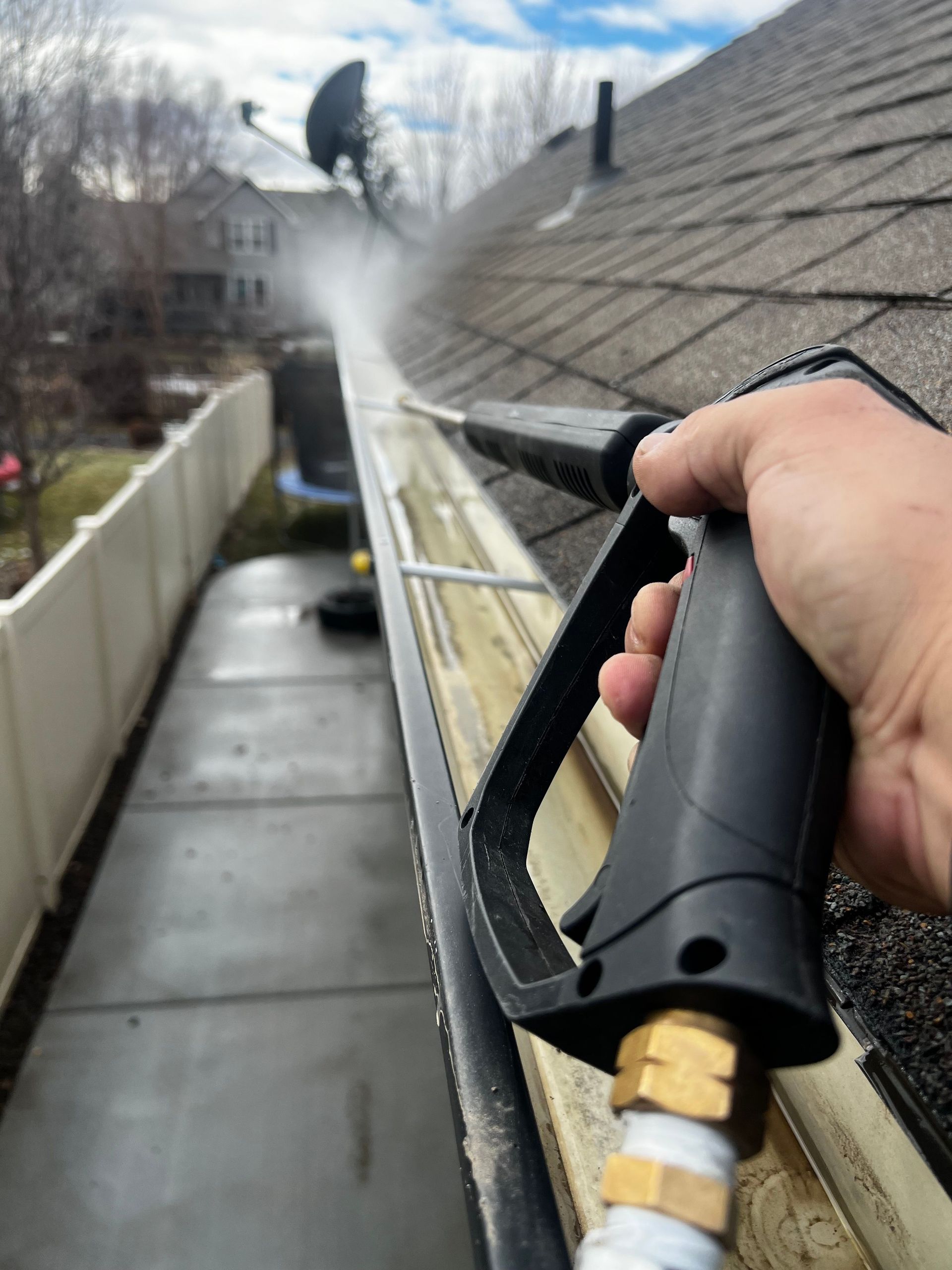
The fix for gutter-related damp usually isn't a damp-proofing job on the wall, it's clearing the gutter that caused it. Get the debris out, make sure the downpipe runs freely, and check the gutter falls the right way so water actually reaches the outlet.
Regular clearing keeps it from coming back. On most Liverpool homes a clear-out once or twice a year, timed for after the autumn leaf drop, keeps the water where it belongs. Pair that with moss removal on the roof and far less debris ends up in the gutter to begin with.
6. When the Wall Needs Attention Too
If an overflow has been running for a long time, clearing the gutter stops it getting worse but the wall may need time and help to dry out. Once the source is fixed, the brickwork can release the moisture it has taken on, though a badly soaked solid wall can take months.
Catching it early is the whole game. A gutter cleared before the damp sets in saves you a redecorating job at the very least, and on the older housing stock across Liverpool it can save you from replastering an entire wall that took on water over several winters.
- Cause: Leaves, moss, and grit block the gutter so rain overflows the edge instead of draining away.
- Effect: Water soaks the external wall constantly, then works through porous brick to the inside.
- Signs: Tide-mark stains, blown plaster, mould, and a musty smell, plus visible overflow in the rain.
- Climate: Liverpool's heavy coastal rain and driving wind speed the whole process up.
- Fix: Clear the gutter and downpipe, keep the roof mossfree, and repeat once or twice a year.
Frequently Asked Questions
Can a blocked gutter really cause damp inside my house?
Yes, it's one of the most common causes. The overflow keeps the outside wall saturated, and porous brick eventually lets that moisture through to the inside face.
How quickly does the damage happen?
Faster than people expect in a wet climate. On a solid-wall Liverpool terrace during a rainy spell, a heavy overflow can show as internal damp within weeks rather than months.
How can I tell if my gutter is the problem?
Look at it during heavy rain. Water spilling over the edge or streaking down the wall below a joint points straight at a blockage, while clear runoff to the downpipe means it's flowing properly.
Will clearing the gutter fix the damp on its own?
It stops the cause, which is the important part. The wall then needs time to dry out, and if it's been soaking for years it may need some redecorating once it's dry.
How often should Liverpool gutters be cleared?
Once or twice a year suits most homes, with the main clear-out after autumn leaf fall. Properties near trees or with heavy roof moss often need the second visit.
Seeing damp patches creep in?
Ben's Roof Cleaning handles gutter cleaning, roof cleaning, and moss removal across Liverpool and Merseyside, with over 15 years of experience. Get in touch or call 0151 541 6960
for a free, no-obligation quote.
Clear Gutters Keep Walls Dry
Damp walls feel like a big, expensive problem, and left alone they become one. But surprisingly often the answer is up at the roofline, in a gutter that just needs clearing before the next storm rolls in off the sea. Keep the water running where it should, and you spare yourself the stains, the mould, and the far larger bill that comes when coastal damp gets a real hold on the brickwork.